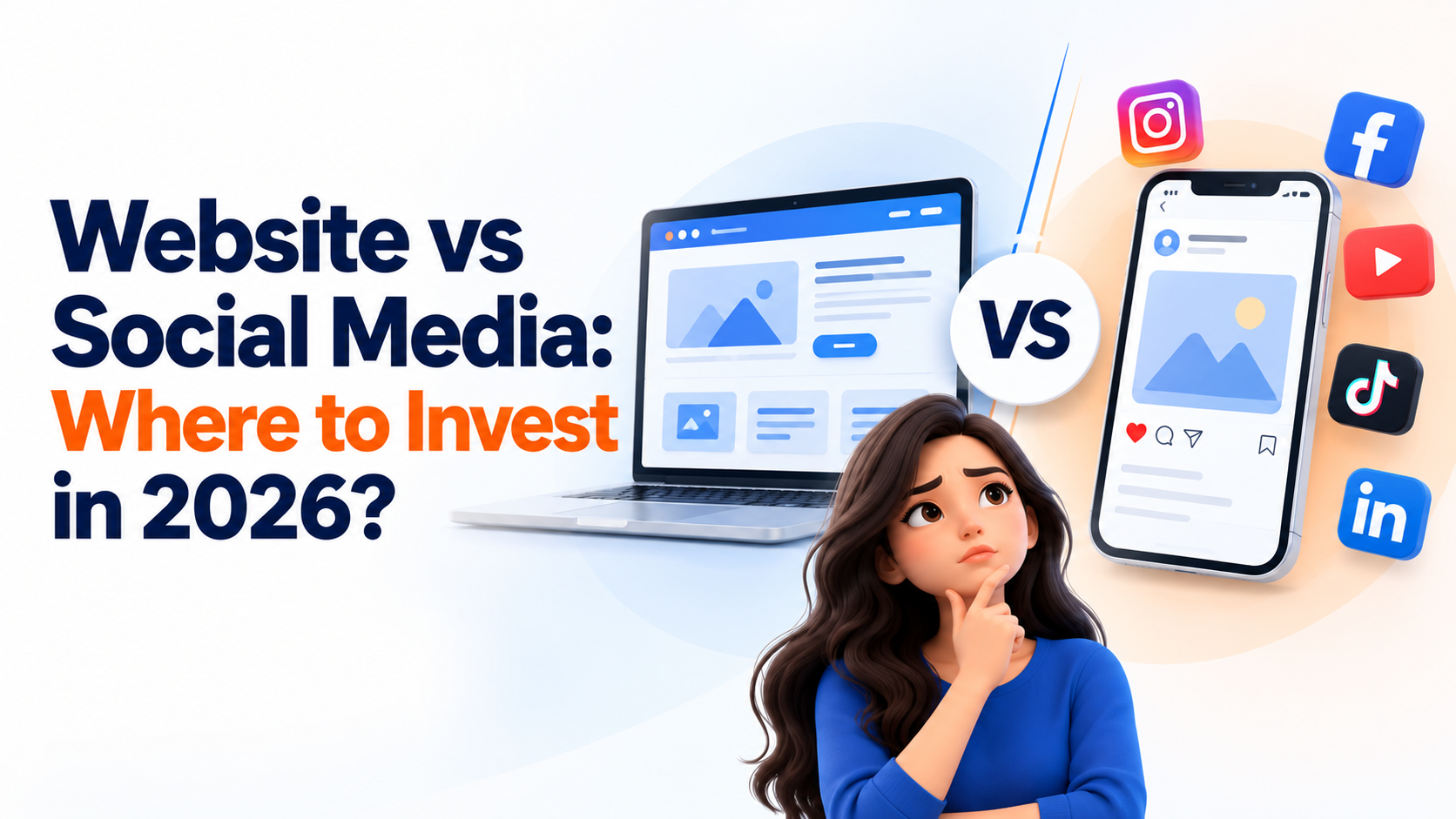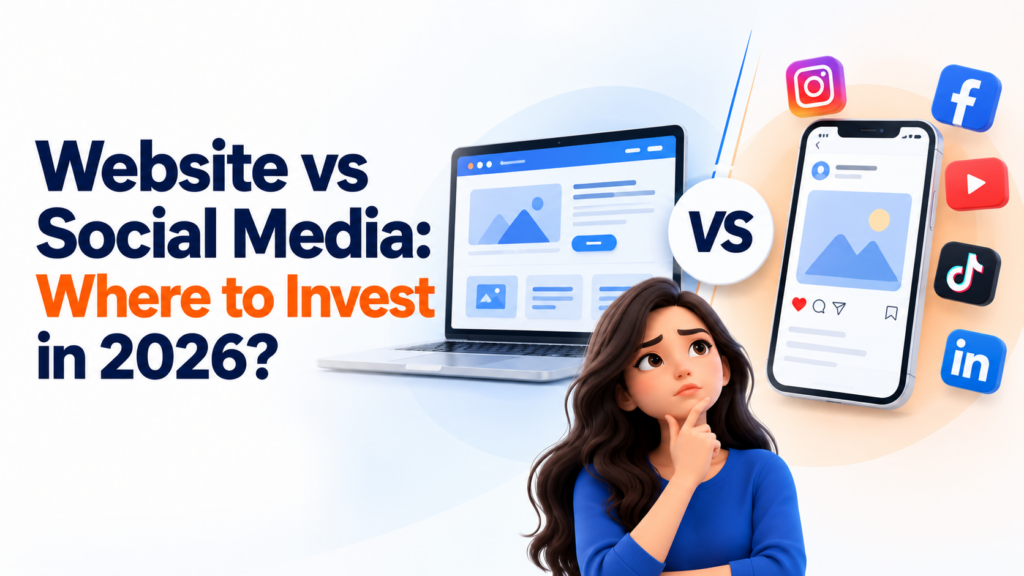
Every business owner hits this question sooner or later: is it better to spend on a professional website or on social media marketing? The website vs social media debate gets louder every year, because both promise visibility, and both compete for the same limited budget.
The honest answer is that they do different jobs. Understanding what each one does best will help you invest where it brings real leads and sales, not just likes and views. Let’s break it down.
1. Why the Website vs Social Media Question Matters in 2026
Social platforms keep changing their algorithms, reducing organic reach, and pushing businesses toward paid promotion. At the same time, customers research businesses online before they call, visit, or buy. Where you put your money decides whether you’re building an asset you own or renting attention that can disappear overnight.
2. What a Website Gives Your Business
A website is your digital headquarters. It’s the one place online where you control the message, design, and customer journey.
- You own it. No algorithm change can switch it off or hide it from your audience.
- It works 24/7. Visitors can learn about your services, see your portfolio, and enquire at any hour.
- It captures high-intent leads. People who find you through search are actively looking for what you offer.
- It builds long-term value. Strong content and SEO keep bringing visitors for months and years.
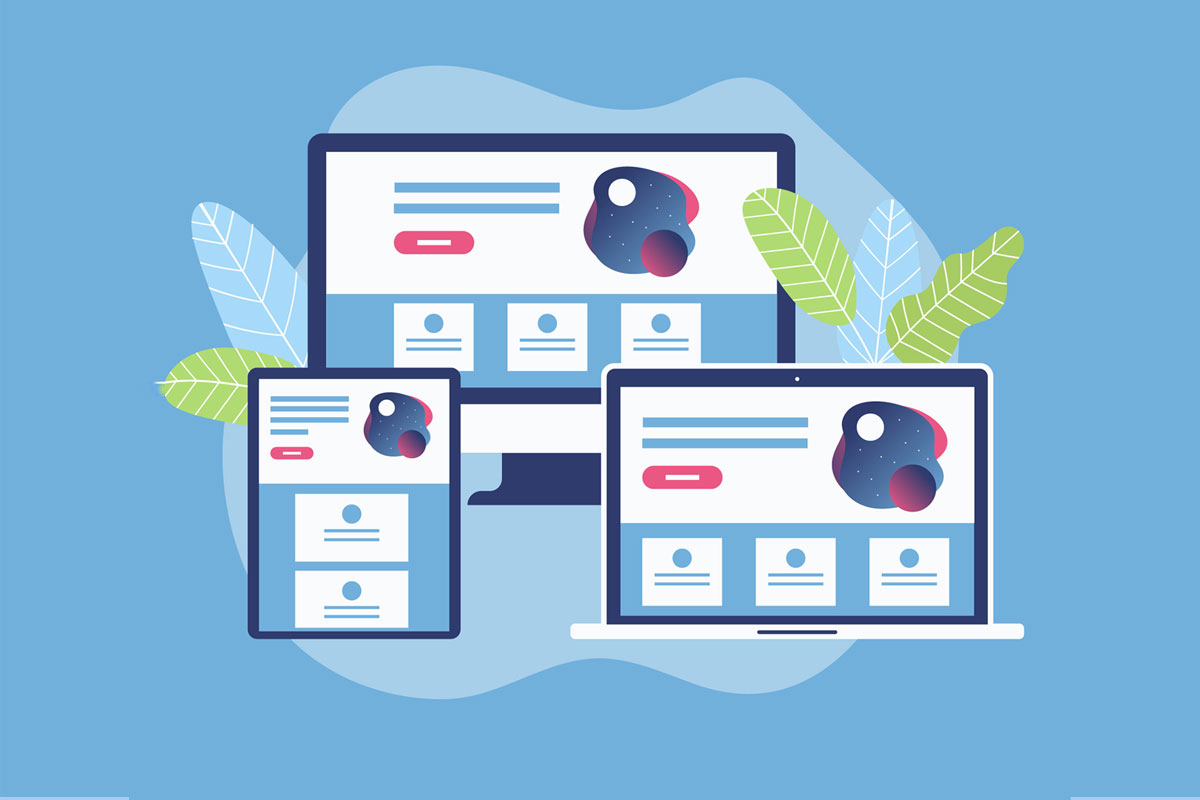
A well-built website design that loads fast and guides visitors toward action is the foundation of every other marketing channel.
3. What Social Media Gives Your Business
Social media is your community and conversation space. It’s where people discover brands, build familiarity, and engage.
- Fast reach and awareness. A good post or reel can put you in front of thousands of people quickly.
- Direct engagement. Comments, messages, and shares let you talk with customers in real time.
- Brand personality. Behind-the-scenes content makes your business feel human and approachable.
- Targeted paid ads. Platforms let you reach audiences by location, interest, and behaviour.
With consistent social media marketing, even a young brand can build visibility without a huge budget.
4. Website vs Social Media: Head-to-Head Comparison
| Factor | Website | Social Media |
|---|---|---|
| Ownership | Fully yours | Platform-controlled |
| Lead quality | High intent (search-driven) | Mixed, often browsing intent |
| Speed of results | Slower, builds over time | Faster visibility |
| Long-term value | Grows with SEO and content | Needs constant posting |
| Credibility | Strong, professional proof | Good for social proof |
| Cost pattern | Upfront build, lower upkeep | Ongoing time or ad spend |
| Risk | Low | Algorithm or account changes |
5. Cost and ROI: Which Pays Off Better?
Social media looks cheap at first, since posting is free, but consistent content creation, design, and ad spend add up. When you stop posting or stop paying, the traffic usually drops with it.
A website needs a larger upfront investment, but it keeps working. Combined with SEO services, it can bring in steady enquiries without paying for every click, which often makes its return stronger over the long run.
6. Which One Generates More Leads?
For most service businesses, websites convert better because visitors arrive with a clear need and a place to take action: a contact form, a call button, or a quote request. Social media is excellent at introducing your brand, but it often needs a landing page or website to turn that interest into an enquiry.
If your website isn’t producing enquiries, read our guide on why your website gets traffic but no leads to find and fix the gaps.
7. Trust and Credibility
When someone hears about your business, they usually Google it. A professional website with reviews, case studies, and clear contact details reassures them instantly. A social page alone, with no website to back it up, can make a business look temporary or less established. Social proof matters, but a website turns it into lasting credibility.
8. Which Is Better for Your Type of Business?
- Local service businesses (clinics, salons, repair, consultants): Website plus local SEO should come first, with social media supporting.
- E-commerce and fashion brands: Both matter, with social driving discovery and the website driving sales.
- B2B companies: Website, SEO, and LinkedIn deliver the strongest results.
- New startups on a tight budget: Start with a simple, conversion-ready website, then grow social presence alongside it.
9. The Smartest Strategy: Don’t Choose One, Connect Both
The best-performing businesses treat the two as a team. Social media attracts attention and builds familiarity. Your website captures that interest and converts it into leads. Use social posts to point people to helpful blog content and landing pages, and use your website to showcase your social proof and links.
A practical starting point: if you can only fund one right now, build or fix your website first. It’s the asset you own, and every future social and ad campaign will perform better when it has a strong destination to send people to.
Final Verdict: Where Should You Invest More in 2026?
If your goal is leads, sales, and long-term growth, invest in your website and SEO first. If your goal is awareness and community, add social media on top. The strongest results come when both work together, with the website as the foundation and social media as the amplifier.
At S2H Digital, we help businesses build high-converting websites, grow through SEO, and run result-driven social media campaigns, all under one roof.
Not sure where your budget will work hardest? Contact S2H Digital for a free consultation and a clear, practical marketing plan for your business.